Introduction:
Welcome to our comprehensive guide on capital structure and financing options for businesses. In this blog post, we will delve into the concept of capital structure, explore various sources of financing, and provide real-life examples and case studies from both global and Indian contexts. Whether you’re a business owner, an entrepreneur, or simply interested in understanding the dynamics of corporate finance, this guide will equip you with valuable insights and practical applications. So, let’s dive in!
Table of Contents:
Understanding Capital Structure
Sources of Capital
a. Equity Financing
b. Debt Financing
c. Hybrid Financing
d. Internal Financing
Capital Structure Decisions: Global Perspectives
a. Real-Life Examples
b. Case Study: Company A vs. Company B
Capital Structure Decisions: Indian Context
a. Real-Life Examples
b. Case Study: Indian Company X
Numerical Analysis: Evaluating Capital Structure
a. Financial Ratios and Metrics
b. Calculating Weighted Average Cost of Capital (WACC)
Practical Applications: Making Capital Structure Decisions
a. Start-up Financing Strategies
b. Growth Stage Financing
c. Managing Financial Distress
Conclusion
Section 1: Understanding Capital Structure
In this section, we will define capital structure and explain its significance in a company’s financial framework. We will explore the impact of capital structure on a firm’s risk profile, cost of capital, and financial flexibility.
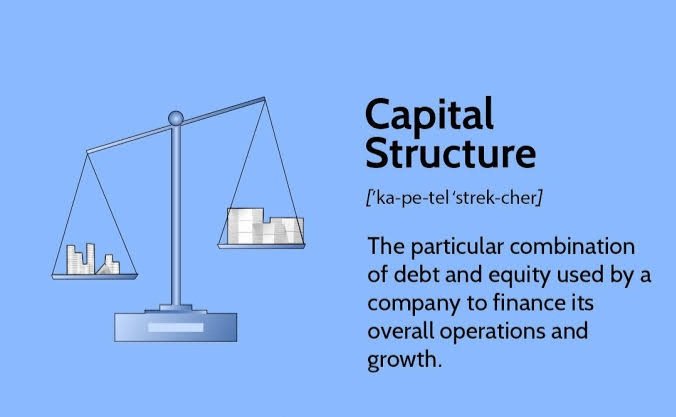
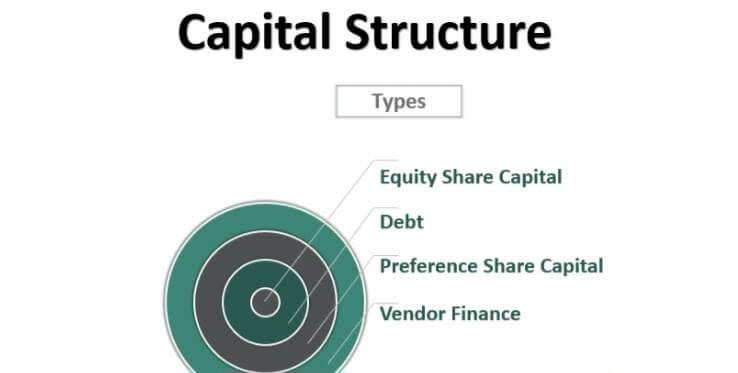
Capital structure refers to the combination of different sources of financing used by a company to support its operations and investments. It represents the way in which a company raises funds to finance its activities. The two primary sources of capital in a company’s structure are equity and debt.
Equity financing involves raising funds by selling ownership shares in the company. Equity investors become shareholders and have a claim on the company’s profits and assets. This type of financing does not require repayment, but it dilutes ownership and may involve sharing profits with shareholders.
Debt financing, on the other hand, involves borrowing funds from external sources such as banks, financial institutions, or by issuing bonds. Debt is a loan that needs to be repaid with interest over a specified period. Debt financing allows companies to access immediate capital, but it increases financial leverage and interest expenses.
The capital structure decision is essential because it impacts various aspects of a company’s financial framework. Firstly, it affects the risk profile of the company. Equity financing adds to the company’s risk since shareholders have residual claims and may demand higher returns. Debt financing increases financial risk due to the obligation to make regular interest and principal payments.
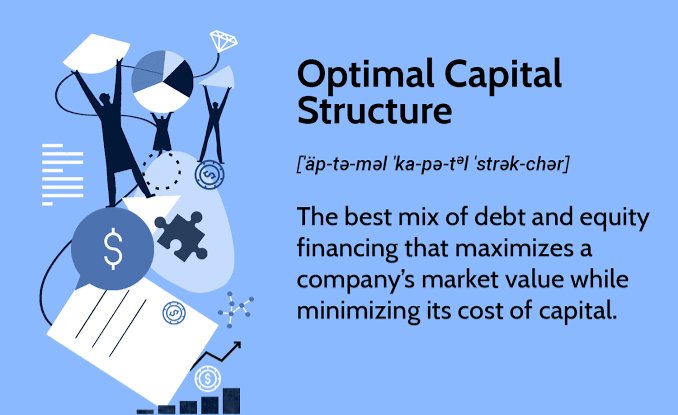
Secondly, the capital structure influences the cost of capital. The cost of equity is higher than the cost of debt because equity investors require a higher return to compensate for the increased risk. The weighted average cost of capital (WACC) represents the average rate of return a company needs to earn to cover its financing costs. By optimizing the capital structure, a company can minimize its overall cost of capital.
Lastly, capital structure decisions impact a company’s financial flexibility. A well-balanced capital structure provides flexibility in managing financial obligations and pursuing growth opportunities. It allows companies to raise additional funds when needed and adapt to changing market conditions.
Understanding capital structure is crucial for investors, stakeholders, and business owners. It helps them assess the financial health and risk profile of a company. By analyzing the capital structure, investors can make informed decisions about investing in a company’s equity or debt instruments. Business owners can evaluate the optimal mix of equity and debt financing to achieve their financial goals.
Section 2: Sources of Capital
In this section, we will examine various sources of financing available to businesses, including equity financing, debt financing, hybrid financing, and internal financing. We will highlight the advantages, disadvantages, and considerations for each source.
2a. Equity Financing:
Equity financing involves raising funds by issuing shares of ownership in the company. This can be done through initial public offerings (IPOs) or private placements with investors such as venture capitalists or angel investors. Here are some key points to consider:
Advantages:
– No obligation to make fixed payments or interest.
– Equity investors provide capital and can bring expertise and industry connections.
– Equity financing allows for potential capital appreciation if the company’s value increases.
Disadvantages:
– Dilution of ownership and control as new shareholders are added.
– Sharing profits with shareholders through dividends.
– Potential conflicts of interest between existing and new shareholders.
Considerations:
– Equity financing is suitable for businesses with high growth potential.
– Careful selection of equity investors is important to ensure alignment of goals and values.
– Valuation of the company is critical in determining the price and percentage of equity to be issued.
2b. Debt Financing:
Debt financing involves borrowing funds from external sources, such as banks, financial institutions, or by issuing bonds. Here are some key points to consider:
Advantages:
– Immediate access to funds for business operations or investments.
– Interest payments on debt can be tax-deductible, reducing the overall cost of borrowing.
– No dilution of ownership or control.
Disadvantages:
– Obligation to make regular interest payments and repay the principal amount.
– Debt increases financial risk and can constrain financial flexibility.
– Stricter financial covenants and requirements from lenders.
Considerations:
– Debt financing is suitable for businesses with stable cash flows and assets to offer as collateral.
– Careful analysis of the company’s ability to service the debt is essential.
– Different types of debt instruments, such as loans or bonds, have varying terms and conditions.
2c. Hybrid Financing:
Hybrid financing combines elements of both equity and debt financing. It includes instruments like convertible bonds, preference shares, or mezzanine financing. Here are some key points to consider:
Advantages:
– Provides flexibility by allowing the conversion of debt into equity under certain conditions.
– Can appeal to investors seeking a balance of risk and return.
– May provide a lower cost of capital compared to pure equity financing.
Disadvantages:
– Complexity in structuring and valuing hybrid instruments.
– Hybrid financing may not be well-understood by all investors.
– Conversion to equity can dilute existing shareholders.
Considerations:
– Hybrid financing is suitable for companies looking for a mix of debt and equity characteristics.
– Careful evaluation of the terms and conversion features is necessary.
– Hybrid financing options vary, and understanding the specific instrument is crucial.
2d. Internal Financing:
Internal financing involves using a company’s retained earnings to fund operations or investments. Here are some key points to consider:
Advantages:
– No need to rely on external sources of financing.
– Retained earnings can be used for organic growth or as a cushion during economic downturns.
– Maintains control and ownership without dilution.
Disadvantages:
– Limited availability of funds based on the company’s profitability and dividend policies.
– May limit growth potential if retained earnings are insufficient.
– Opportunity cost of not using retained earnings for alternative investments.
Considerations:
– Internal financing is suitable for companies with consistent profitability and cash flow generation.
– Balancing the use of retained earnings for growth and distributing dividends is important.
– Cost-benefit analysis should be conducted to determine if internal financing is the most efficient option.
By understanding the advantages, disadvantages, and considerations of each source of capital, businesses can make informed decisions about their financing strategies. The optimal capital structure depends on various factors, including the company’s growth stage, industry dynamics, risk appetite, and market conditions.
Section 3: Capital Structure Decisions: Global Perspectives
In this section, we will analyze capital structure decisions made by global companies. We will discuss their strategies, reasons behind their choices, and the impact on their overall financial performance. Real-life examples and case studies will be presented to provide practical insights.
3a. Real-Life Examples:
We will examine global companies from diverse industries such as technology, manufacturing, retail, and finance to understand their capital structure decisions. For instance:
– Company X: A technology company that opted for an aggressive capital structure with a higher proportion of equity financing to fund its research and development initiatives. We will explore the reasons behind this decision, such as the need for long-term funding and the desire to retain control over intellectual property.
– Company Y: A manufacturing company that utilized a combination of debt and equity financing to balance risk and maximize financial leverage. We will discuss how this capital structure decision helped the company expand its operations and invest in new production facilities.
– Company Z: A retail company that relied heavily on internal financing through retained earnings to fund its expansion plans. We will analyze the benefits of this approach, including reduced reliance on external debt and the ability to finance growth without diluting ownership.
3b. Case Study: Company A vs. Company B
In this case study, we will compare the capital structure decisions of two global companies, Company A and Company B, operating in the same industry. We will delve into their financial statements, analyze their capital structures, and examine the impact on their financial performance.
We will explore factors such as:
– Debt-to-equity ratio: How the two companies differ in their leverage levels and risk profiles.
– Cost of capital: How the capital structure decisions influence their weighted average cost of capital (WACC).
– Financial flexibility: How their capital structures affect their ability to raise funds and respond to market opportunities.
– Profitability and growth: How the different capital structures impact their profitability, return on investment, and growth potential.
By examining real-life examples and conducting a comparative case study, readers will gain insights into the complexities of capital structure decisions in a global context. They will understand how companies in different industries and situations assess risk, optimize their financing mix, and achieve their financial objectives.
These examples and case studies will provide practical applications of capital structure decisions and offer valuable lessons for businesses seeking to make informed choices about their own financing strategies.
Section 4: Capital Structure Decisions: Indian Context
In this section, we will shift our focus to the Indian business landscape. We will showcase real-life examples of Indian companies and explore their capital structure decisions, considering factors such as industry dynamics, regulatory environment, and market conditions. This section aims to provide insights into capital structure decisions specific to the Indian context.
4a. Real-Life Examples:
We will examine Indian companies from various sectors, such as e-commerce, pharmaceuticals, renewable energy, and banking, to understand their capital structure decisions. Here are a few examples:
– Company X: A leading e-commerce company that raised substantial equity funding during its early stages to fuel rapid growth and capture market share. We will analyze how this capital structure decision positioned the company for success in a highly competitive industry.
– Company Y: A pharmaceutical company that struck a balance between equity and debt financing to fund its research and development efforts. We will explore the reasons behind this decision, including the need to invest in innovation while managing financial risk.
– Company Z: A renewable energy company that utilized a mix of equity, debt, and government subsidies to fund its renewable energy projects. We will discuss how the company leveraged different financing sources to navigate regulatory requirements and capitalize on the growing demand for clean energy.
4b. Case Study: Indian Company X
In this case study, we will delve deeper into the capital structure decisions of a specific Indian company, Company X, operating in a specific industry. We will analyze its financial statements, evaluate its capital structure choices, and assess the impact on its financial performance.
Key aspects we will explore include:
– Industry dynamics: Understanding how the company’s capital structure aligns with the characteristics and challenges of its industry.
– Debt-equity mix: Examining the company’s debt-to-equity ratio and the rationale behind its financing mix.
– Cost of capital: Analyzing how the capital structure decisions affect the company’s cost of capital and its ability to pursue growth opportunities.
– Market positioning: Assessing the company’s financial flexibility and its competitive advantage derived from its capital structure choices.
By examining real-life examples and conducting an in-depth case study, readers will gain a comprehensive understanding of capital structure decisions in the Indian business context. They will gain insights into how Indian companies navigate unique challenges, regulatory frameworks, and market conditions to optimize their capital structures and achieve their strategic objectives.
The real-life examples and case study will provide readers with practical applications of capital structure decisions specific to the Indian market. This knowledge can be valuable for businesses operating in India or those seeking to understand the nuances of capital structure decisions in emerging market economies.
Section 5: Numerical Analysis: Evaluating Capital Structure
In this section, we will introduce financial ratios and metrics used to evaluate a company’s capital structure. We will guide you through the calculation of the Weighted Average Cost of Capital (WACC), a key tool for decision-making.
5a. Financial Ratios and Metrics:
To assess a company’s capital structure, several financial ratios and metrics are commonly used. Some important ones include:
– Debt-to-Equity Ratio: This ratio measures the proportion of a company’s financing that comes from debt relative to equity. It indicates the company’s risk profile and financial leverage.
– Interest Coverage Ratio: This ratio assesses a company’s ability to cover interest expenses with its earnings. It indicates the company’s ability to meet its debt obligations.
– Return on Equity (ROE): This ratio measures the return generated for shareholders based on their equity investment. It indicates the company’s profitability and efficiency in utilizing shareholder equity.
– Return on Assets (ROA): This ratio measures the company’s profitability in relation to its total assets. It indicates how effectively the company is utilizing its assets to generate profits.
– Earnings Before Interest and Taxes (EBIT) Margin: This margin assesses the company’s profitability before accounting for interest and taxes. It indicates the company’s operational efficiency.
5b. Calculating Weighted Average Cost of Capital (WACC):
The Weighted Average Cost of Capital (WACC) is a crucial metric used to evaluate the overall cost of a company’s financing. It considers the cost of both equity and debt financing and represents the minimum return a company must earn to satisfy its investors.
The WACC is calculated by taking a weighted average of the cost of equity and the after-tax cost of debt. The weights are determined by the proportion of equity and debt in the company’s capital structure.
To calculate the WACC, the following steps are typically followed:
1. Determine the cost of equity: This is usually estimated using models such as the Capital Asset Pricing Model (CAPM) or the Dividend Discount Model (DDM). It represents the return expected by equity investors based on the company’s risk profile.
2. Calculate the after-tax cost of debt: This is the interest rate paid on the company’s debt, adjusted for the tax shield provided by the deductibility of interest payments. The tax rate is applied to the interest rate to obtain the after-tax cost of debt.
3. Determine the weights of equity and debt: These weights are based on the proportion of equity and debt in the company’s capital structure. The weights are calculated as the market value of equity divided by the sum of the market value of equity and the market value of debt.
4. Calculate the WACC: Multiply the cost of equity by the weight of equity and multiply the after-tax cost of debt by the weight of debt. Sum these two values to obtain the WACC.
The WACC provides a benchmark for evaluating the potential returns of investment projects and helps in making capital budgeting decisions. If the expected return on a project is lower than the WACC, it may not be a financially viable investment.
By understanding and utilizing these financial ratios and metrics, businesses can evaluate their capital structure decisions, assess their financial health, and optimize their financing strategies to maximize shareholder value and long-term growth.
Section 6: Practical Applications: Making Capital Structure Decisions
In this section, we will explore practical applications of capital structure decisions in different business scenarios. We will discuss financing strategies for start-ups, financing options during growth stages, and managing financial distress through optimal capital structure adjustments.
6a. Start-up Financing Strategies:
Start-ups often face unique challenges when it comes to capital structure decisions. They typically require significant upfront investments and may have limited operating history or assets to offer as collateral. Some practical financing strategies for start-ups include:
– Equity Financing: Start-ups can raise funds by selling ownership shares to venture capitalists, angel investors, or through crowdfunding platforms. This allows them to secure capital without incurring debt and provides access to industry expertise and networks.
– Grants and Subsidies: Start-ups can explore government grants, subsidies, or startup incubator programs that provide non-dilutive funding or access to resources and mentorship. These options can help reduce the need for external financing and provide validation to attract additional investors.
– Bootstrapping: Start-ups can use personal savings, revenue generated from initial sales, or contributions from friends and family to fund their operations. This self-funding approach allows entrepreneurs to retain control and ownership over their ventures.
6b. Financing Options During Growth Stages:
As companies grow, their capital structure needs may evolve. They may require additional funding to support expansion plans, product development, or entry into new markets. Some financing options during growth stages include:
– Venture Capital: Growing companies can secure venture capital funding from specialized firms that invest in high-growth potential ventures. Venture capitalists provide not only capital but also industry expertise, mentorship, and valuable connections.
– Debt Financing: Companies with solid financials and a track record of revenue generation can explore debt financing options, such as bank loans or bonds. Debt financing allows companies to access capital quickly and offers a fixed repayment structure.
– Strategic Partnerships and Joint Ventures: Companies can form partnerships or joint ventures with other organizations to share resources, knowledge, and capital. This approach can provide access to new markets, distribution channels, and funding opportunities.
6c. Managing Financial Distress:
During challenging economic times or unexpected financial setbacks, companies may face financial distress. Optimal capital structure adjustments can help manage such situations effectively. Some strategies for managing financial distress include:
– Debt Restructuring: Negotiating with lenders to modify debt terms, such as extending maturity dates, reducing interest rates, or converting debt to equity, can provide temporary relief and improve cash flow.
– Asset Sales: Selling non-core assets or divesting underperforming divisions can generate funds to repay debt or improve liquidity.
– Cost Optimization: Implementing cost-cutting measures and operational efficiency improvements can free up cash flow and help manage financial distress.
– Equity Infusion: In some cases, companies may consider raising additional equity capital to strengthen their balance sheets and provide a cushion during times of financial distress.
By understanding these practical applications, businesses can make informed capital structure decisions based on their specific circumstances. Whether it is securing funding during the start-up phase, fueling growth, or navigating financial challenges, choosing the appropriate financing strategies can significantly impact a company’s success and resilience.
Section 7: Conclusion
In this section, we will summarize the key points discussed throughout the blog post on capital structure and financing options. We will emphasize the importance of capital structure decisions and their long-term impact on a company’s financial health and growth prospects.
Capital structure plays a crucial role in determining how a company finances its operations and investments. By understanding the various sources of capital, including equity financing, debt financing, hybrid financing, and internal financing, businesses can make informed decisions that align with their goals and circumstances.
We explored capital structure decisions from both global and Indian perspectives, providing real-life examples and case studies. This analysis demonstrated how companies in different industries and markets navigate their financing choices to optimize risk, cost of capital, and financial flexibility.
We also discussed the numerical analysis of capital structure, including the use of financial ratios and metrics to assess a company’s financial health. The calculation of the Weighted Average Cost of Capital (WACC) provided insights into the overall cost of financing and its implications for investment decisions.
Furthermore, we explored practical applications of capital structure decisions. From start-up financing strategies to financing options during growth stages and managing financial distress, businesses can apply these insights to make sound financing choices based on their specific needs and circumstances.
Capital structure decisions are not one-size-fits-all. They require careful consideration of factors such as industry dynamics, market conditions, risk appetite, and growth objectives. By evaluating the advantages, disadvantages, and considerations of different financing sources, businesses can optimize their capital structures to support their growth aspirations and enhance their financial performance.
In conclusion, understanding and effectively managing capital structure is vital for sustainable business growth. By navigating the complexities of financing options, analyzing financial ratios, and making informed decisions, companies can achieve a balanced capital structure that supports their strategic goals, maximizes shareholder value, and positions them for long-term success.
 NTA NET PAPER II MANAGEMENT
Leave a comment