

Introduction:
Welcome to our blog post on the power of collective bargaining! In this article, we will explore the concept of collective bargaining, its importance in ensuring fairness and empowerment in the workplace, and its real-life impact on both employees and employers. We will provide numerous examples and case studies to illustrate the significance and effectiveness of collective bargaining. So, let’s dive in and discover how collective bargaining can shape a better working environment for all.
Table of Contents:
1. Introduction
2. What is Collective Bargaining?
3. The Importance of Collective Bargaining
4. Real-Life Examples of Collective Bargaining
a. Example 1: The Fight for Fair Wages in the Fast Food Industry
b. Example 2: Improving Working Conditions in the Garment Industry
5. Case Studies on Collective Bargaining
a. Case Study 1: United Auto Workers Negotiations with General Motors
b. Case Study 2: The Airline Pilots Association and Airline Safety Standards
6. The Benefits of Collective Bargaining
7. Overcoming Challenges in Collective Bargaining
8. The Future of Collective Bargaining
9. Conclusion
10. Index
11. Categories: Labor Relations, Workplace Empowerment
Section 2: What is Collective Bargaining?
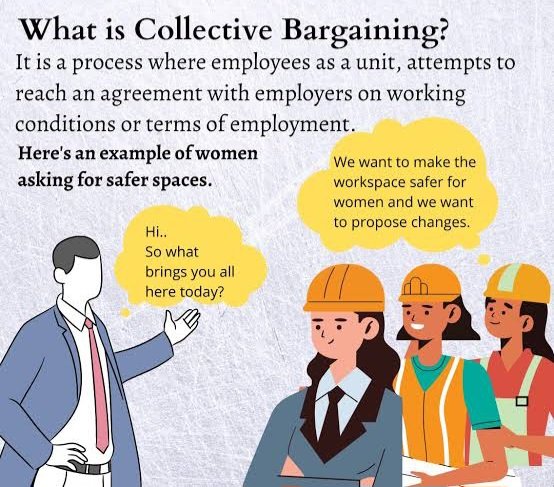
Collective bargaining is a process whereby workers, typically represented by a labor union, negotiate with their employers to establish terms and conditions of employment. This negotiation encompasses various aspects such as wages, benefits, working hours, job security, and other employment-related matters. The collective bargaining agreement reached through this process serves as a binding contract between the workers and the employer.
Section 3: The Importance of Collective Bargaining
Collective bargaining plays a crucial role in ensuring fairness and balance between the interests of employers and employees. It provides a platform for workers to voice their concerns, demands, and expectations, ultimately resulting in improved working conditions, fair compensation, and job security. Moreover, collective bargaining fosters a collaborative work environment that enhances productivity and employee morale.
Section 4: Real-Life Examples of Collective Bargaining
a. Example 1: The Fight for Fair Wages in the Fast Food Industry
– Discusses how fast food workers across various countries have come together to demand higher wages.
– Highlights the impact of collective bargaining on the “Fight for $15” movement.
– Demonstrates how collective bargaining has brought tangible changes to the lives of fast food workers.
b. Example 2: Improving Working Conditions in the Garment Industry
– Explores how collective bargaining has led to significant improvements in the garment industry, including enhanced safety measures and fair treatment of workers.
– Highlights the role of organizations like the International Labour Organization (ILO) in promoting collective bargaining.
Section 5: Case Studies on Collective Bargaining
a. Case Study 1: United Auto Workers Negotiations with General Motors
– Examines the historical case of the United Auto Workers union negotiating with General Motors.
– Illustrates how collective bargaining has shaped the automotive industry and protected the rights of workers.
– Discusses key outcomes of the negotiations and their implications.
b. Case Study 2: The Airline Pilots Association and Airline Safety Standards
– Explores the case of the Airline Pilots Association negotiating for improved safety standards.
– Demonstrates how collective bargaining has contributed to safer skies and enhanced working conditions for pilots.
Section 6: The Benefits of Collective Bargaining
Outlines the advantages of collective bargaining for both employees and employers, including increased job satisfaction, higher productivity, reduced turnover, and improved organizational stability.
Section 7: Overcoming Challenges in Collective Bargaining
Discusses common challenges faced during collective bargaining, such as power imbalances, resistance from employers, and legal constraints. Offers strategies for addressing these challenges and ensuring successful negotiations.
Section 8: The Future of Collective Bargaining
Examines the evolving landscape of collective bargaining in the modern era, including the impact of technology, changing workforce dynamics, and emerging trends. Explores potential opportunities and challenges for the future.
Conclusion:
Collective bargaining is a powerful tool that empowers workers and promotes fairness in the workplace. Through real-life examples and case studies, we have seen how collective bargaining has brought about positive changes in various industries. By understanding its importance and learning from successful instances, we can work towards creating a more equitable and harmonious work environment for all. Let us embrace collective bargaining as a means to secure a better future for workers and employers alike.
Categories: Labor Relations, Workplace Empowerment
https://pagead2.googlesyndication.com/pagead/js/adsbygoogle.js?client=ca-pub-3482330748000937
 NTA NET PAPER II MANAGEMENT
Leave a comment