
Introduction:
Welcome to our comprehensive guide on labour welfare, a crucial aspect of any thriving organization. In this blog post, we will delve into the concept of labour welfare, its significance in the modern workplace, and the positive impact it can have on employee well-being, organizational success, and various dimensions of human resource management. We will provide real-life examples, news updates, editorials, and explore current trends in labour welfare. Additionally, we will relate labour welfare to other topics within human resource management, and compare different approaches and strategies. So, let’s embark on a journey into the multifaceted world of labour welfare!
Table of Contents:
1. Introduction
2. Understanding Labour Welfare
3. Significance of Labour Welfare
4. Real-Life Examples of Successful Labour Welfare Initiatives
a. Case Study 1: Microsoft’s Employee Wellness Program
b. Case Study 2: Patagonia’s Work-Life Balance Policies
c. Case Study 3: Unilever’s Sustainable Employee Welfare Initiatives
5. News and Current Trends in Labour Welfare
6. Linking Labour Welfare with Human Resource Management
a. Recruitment and Retention
b. Employee Engagement
c. Performance Management
7. Comparative Analysis of Labour Welfare Approaches
a. Progressive vs. Traditional Approaches
b. Small vs. Large Organizations
8. Addressing Challenges and Finding Solutions in Implementing Labour Welfare Programs
9. Conclusion
1. Introduction:
Labour welfare plays a crucial role in fostering a positive work environment and ensuring the well-being of employees. By prioritizing employee welfare, organizations can create a motivated workforce, enhance job satisfaction, and drive organizational success. In this section, we will provide an overview of the topic and highlight its importance in today’s workplace.
2. Understanding Labour Welfare:
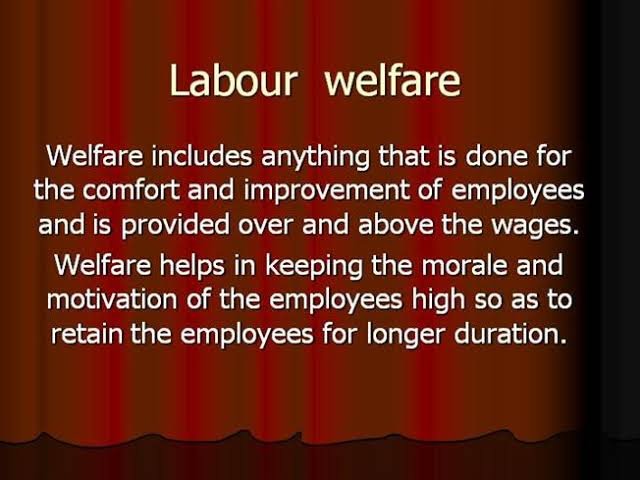
Labour welfare encompasses various initiatives and policies aimed at safeguarding the rights, health, safety, and overall well-being of employees. It goes beyond legal requirements and focuses on creating a supportive work environment where employees feel valued and cared for. This section will define and explore the key aspects of labour welfare, including its historical background and evolution.
3. Significance of Labour Welfare:
Labour welfare is not just a moral obligation; it also offers numerous benefits to organizations. By investing in employee well-being, companies can ERP-S (improve employee engagement, increase employee retention, enhance productivity, facilitate emplyee to satisfy him)We will discuss the significance of labour welfare in promoting a positive organizational culture and achieving success across various dimensions of human resource management.
4. Real-Life Examples of Successful Labour Welfare Initiatives:
To illustrate the practical implementation of labour welfare initiatives, we will examine real-life examples from renowned companies that have demonstrated outstanding commitment to their employees’ well-being.
a. Case Study 1: Microsoft’s Employee Wellness Program:
Microsoft’s commitment to employee well-being is demonstrated through its comprehensive wellness program. The company provides employees with access to fitness facilities, mental health support, and work-life balance initiatives. We will delve into the details of this program and explore its impact on employee satisfaction, productivity, and overall organizational performance.
b. Case Study 2: Patagonia’s Work-Life Balance Policies:
Patagonia, a leading outdoor clothing brand, has gained recognition for its progressive work-life balance policies. Through initiatives such as flexible working hours, on-site childcare, and paid parental leave, Patagonia has fostered a family-friendly work environment. We will explore how these policies have contributed to the company’s success and positively impacted employee well-being, while maintaining high levels of productivity.
c. Case Study 3: Unilever’s Sustainable Employee Welfare Initiatives:
Unilever, a multinational consumer goods company, has implemented sustainable employee welfare initiatives, focusing on environmental sustainability and social responsibility. We will examine how Unilever’s approach to labour welfare aligns with its overall corporate social responsibility strategy, and the positive outcomes it has generated.
5. News and Current Trends in Labour Welfare:
To stay up-to-date with the latest developments in labour welfare, it is essential to explore news updates, editorials, and current trends. We will provide insights into recent advancements in labour welfare practices, emerging initiatives, and the impact of global events or societal changes on employee well-being.
6. Linking Labour Welfare with Human Resource Management:
Labour welfare is closely interconnected with various other topics within human resource management. In this section, we will explore how labour welfare aligns with key HR functions and strategies, including recruitment and retention, employee engagement, and performance management. We will highlight the symbiotic relationship between labour welfare and these HR dimensions, showcasing how they influence and reinforce each other.
a. Recruitment and Retention:
Labour welfare initiatives play a significant role in attracting and retaining top talent. We will discuss how organizations can leverage their welfare programs to create a competitive advantage in the recruitment process and increase employee loyalty, leading to improved retention rates.
b. Employee Engagement:
Labour welfare programs contribute to employee engagement by fostering a sense of belonging, trust, and satisfaction. We will explore how initiatives such as employee recognition, career development opportunities, and a positive work culture can enhance employee engagement and create a motivated workforce.
c. Performance Management:
Labour welfare initiatives have a direct impact on employee performance. We will discuss how programs that promote work-life balance, mental health support, and skill development can positively influence employee performance, leading to improved overall organizational performance.
7. Comparative Analysis of Labour Welfare Approaches:
Different organizations may adopt varying approaches to labour welfare. In this section, we will conduct a comparative analysis of progressive vs. traditional approaches and explore how labour welfare strategies differ between small and large organizations. We will highlight the advantages and challenges associated with each approach, providing insights into the effectiveness of different strategies.
8. Addressing Challenges and Finding Solutions in Implementing Labour Welfare Programs:
While implementing labour welfare programs, organizations may face challenges such as budget constraints, resistance to change, or lack of awareness. In this section, we will discuss common challenges and provide practical solutions to overcome them. Real-life examples will be shared to demonstrate how companies have effectively addressed and mitigated these challenges.
9. Conclusion:
Labour welfare is not only a legal obligation but also a strategic investment for organizations seeking long-term success. By prioritizing employee well-being, companies can create a positive work environment, enhance employee satisfaction, improve productivity, boost employee engagement, increase employee retention, and ultimately achieve organizational success. Through real-life examples, news updates, editorials, and a comprehensive exploration of labour welfare, we have demonstrated the practical implementation of initiatives that positively impact employees and organizations alike.
https://pagead2.googlesyndication.com/pagead/js/adsbygoogle.js?client=ca-pub-3482330748000937
 NTA NET PAPER II MANAGEMENT
Leave a comment