Introduction:
Welcome to our blog, where we explore the fascinating world of human behavior! In this article, we will delve into the MARS Model of Individual Behavior—an insightful framework that sheds light on the factors influencing how individuals behave in various situations. Whether you’re a psychology enthusiast, a student, or simply curious about understanding human nature, this guide will provide you with a comprehensive overview of the MARS Model. So let’s dive in!
Gain insights into the various components of the model and their practical implications.]
#Introduction to the MARS Model:
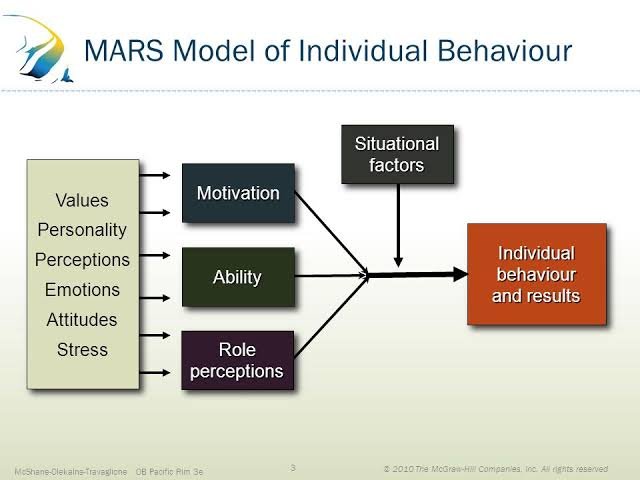
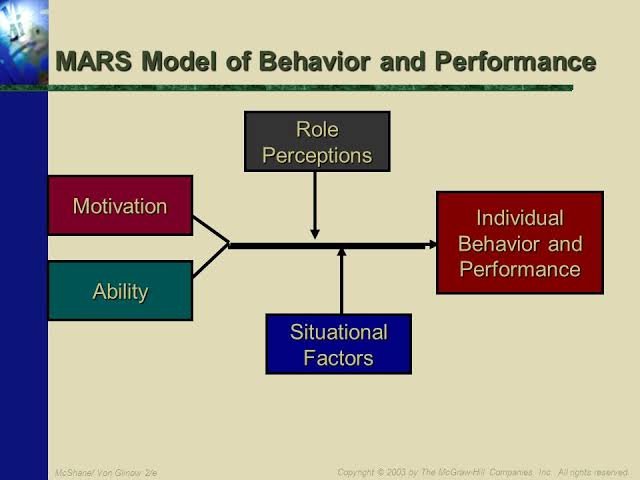
The MARS Model of Individual Behavior, developed by Michael Mount and his colleagues, offers a comprehensive framework to understand and analyze human behavior. MARS stands for four key factors that shape individual behavior: Motivation, Ability, Role Perception, and Situational Factors.
#Motivation:
Motivation refers to the internal and external factors that drive individuals to take certain actions. It encompasses their desires, needs, goals, and aspirations. Understanding the motives behind behavior is crucial for comprehending why people act the way they do. For instance, an employee’s motivation to excel at work might be driven by the desire for recognition or career advancement.
#Ability:
Ability represents an individual’s knowledge, skills, and capabilities to perform a particular task. It considers both the innate abilities and the acquired competencies through education, training, and experience. Assessing the ability factor helps us understand whether individuals have the necessary resources and skills to accomplish a task effectively.
#Role Perception:
Role perception refers to how individuals understand and interpret their responsibilities and obligations within a specific situation or context. It involves their understanding of the expectations others have of them, as well as their own perception of what is expected. Clear role perception leads to improved performance and cooperation, while confusion or misinterpretation can result in suboptimal behavior.
#Situational Factors:
Situational factors encompass the external conditions, circumstances, and constraints that influence individual behavior. These may include time pressures, organizational culture, available resources, and the social environment. Understanding situational factors is crucial for predicting and explaining behavior, as they can significantly impact how individuals respond to different situations.
#Practical Implications of the MARS Model:
The MARS Model of Individual Behavior has several practical implications for various domains, including organizations, education, and personal development.
In an organizational context, understanding the MARS Model can help managers motivate employees effectively, provide necessary resources and training to enhance their abilities, clarify role expectations, and create a supportive work environment. By aligning the factors of motivation, ability, role perception, and situational factors, organizations can foster positive employee behavior and improve overall performance.
In education, the MARS Model can guide instructors in designing instructional strategies that promote student engagement and learning. By considering students’ motivation, assessing their abilities, clarifying role expectations, and creating a conducive learning environment, educators can facilitate effective learning experiences.
On a personal level, the MARS Model encourages self-reflection and self-awareness. By assessing one’s own motivations, abilities, perceptions, and situational factors, individuals can gain insights into their behavior patterns and make conscious efforts to improve their personal and professional lives.
#Conclusion:
The MARS Model of Individual Behavior offers a valuable framework for understanding human behavior by considering the interplay of motivation, ability, role perception, and situational factors. By exploring these elements, we gain insights into why individuals behave the way they do and how to optimize behavior in various contexts. Applying the MARS Model can lead to improved organizational performance, enhanced educational experiences
 NTA NET PAPER II MANAGEMENT
Leave a comment