Category: Operation research/Mathematics
Introduction:
Linear programming can seem intimidating at first, but it doesn’t have to be! In this blog post, we’ll walk you through a simple example of linear programming using the production planning problem. We’ll break down the problem into easy-to-understand steps and show you how to find the optimal solution using linear programming techniques.
The Production Planning Problem:
Let’s imagine a company that manufactures two types of products, X and Y. The company has limited resources, including labor hours and raw materials. They want to determine the optimal production quantities of each product to maximize their profit while staying within the resource constraints.
Objective:
Maximize profit (in dollars)
Constraints:
1. Labor hours: 2X + 3Y ≤ 120 hours
2. Raw materials: X + Y ≤ 80 units
3. Non-negativity: X ≥ 0, Y ≥ 0
Solution:
To solve this problem using linear programming, we’ll follow these steps:
Step 1: Define the Objective Function:
The objective is to maximize profit. Let’s say the profit per unit of X is $10 and the profit per unit of Y is $15. So, the objective function can be expressed as:
Objective Function: 10X + 15Y
Step 2: Set up the Constraints:
We have two constraints in this example. The labor hours constraint is 2X + 3Y ≤ 120, and the raw materials constraint is X + Y ≤ 80.
Step 3: Plot the Feasible Region:
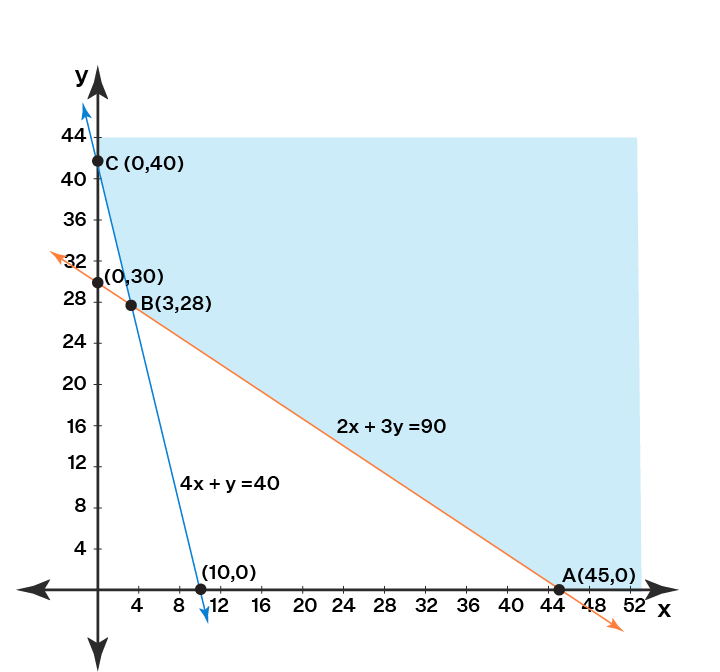
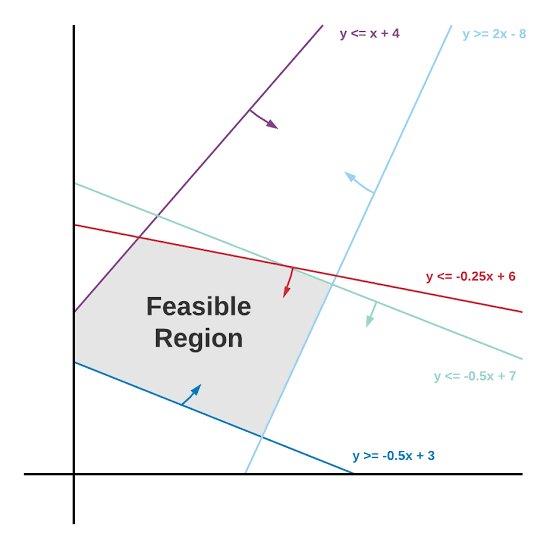
To visualize the feasible region, we plot the constraints on a graph and shade the region that satisfies all the constraints.
Step 4: Identify the Optimal Solution:
The optimal solution is the point within the feasible region that maximizes the objective function. In this case, it would be the point where the objective function line is tangent to the feasible region.
Step 5: Calculate the Optimal Production Quantities:
Once we identify the optimal solution point, we can determine the production quantities of products X and Y that yield the maximum profit. These quantities correspond to the coordinates of the optimal solution point.
Conclusion:
By following these simple steps, you can solve a basic linear programming problem like the production planning example. Linear programming provides a systematic approach to optimize decision-making and resource allocation in various real-world scenarios. With practice and familiarity, you can tackle more complex problems and explore advanced techniques in linear programming.
Stay tuned for more blog posts where we’ll cover additional examples and delve deeper into linear programming concepts. Linear programming doesn’t have to be complicated, and we’re here to guide you through it!
 NTA NET PAPER II MANAGEMENT
Leave a comment