Category: Leadership Development
Introduction:
In today’s rapidly evolving business landscape, effective leadership is crucial for organizational success. As new challenges emerge, traditional leadership theories are being reevaluated, and new paradigms are emerging. One such paradigm that has gained significant attention is the Leader Exchange Management Theory. In this blog post, we will explore this transformative theory and its implications for leadership development.
Understanding Leader Exchange Management Theory:
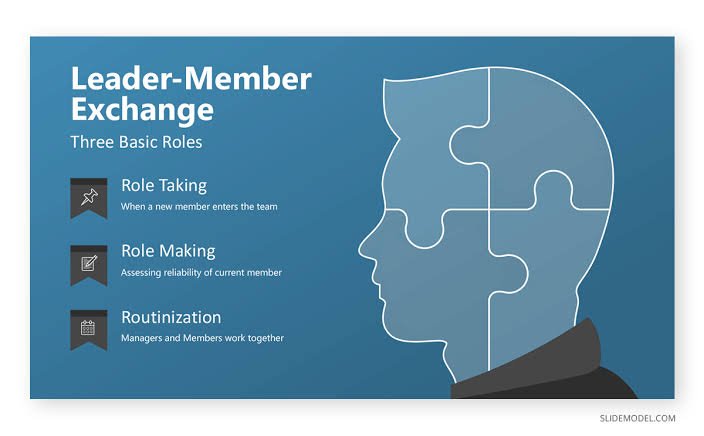
Leader Exchange Management Theory, also known as LMX theory, is a dynamic leadership approach that emphasizes the quality of the relationship between leaders and their subordinates. It focuses on the concept of leader-member exchanges (LMX), which refers to the unique interactions and exchanges between leaders and individual followers.
Unlike traditional theories that view leadership as a one-size-fits-all concept, LMX theory recognizes that leaders establish different relationships with each follower, forming two distinct groups: the in-group and the out-group. The in-group consists of individuals who enjoy a higher level of trust, respect, and support from their leader, while the out-group experiences a more formal, transactional relationship.
The Power of In-Group Relationships:
The Leader Exchange Management Theory highlights the importance of cultivating strong in-group relationships. Leaders who invest time and effort into developing high-quality exchanges with their subordinates experience numerous benefits. These benefits include increased employee engagement, enhanced job satisfaction, higher levels of commitment, and improved performance outcomes.
In-group members are more likely to receive personalized attention, challenging assignments, and opportunities for growth and development. They enjoy greater autonomy and are trusted with important tasks, which further strengthens their sense of ownership and loyalty to the organization. As a result, leaders who foster positive in-group exchanges create a culture of collaboration and empowerment, leading to improved overall team performance.
Expanding Leadership Potential:
The implementation of Leader Exchange Management Theory also expands the potential for leadership within an organization. By recognizing the value of in-group relationships, leaders can identify emerging leaders and develop their potential through mentoring, coaching, and providing growth opportunities. This approach encourages a broader distribution of leadership responsibilities and enables a more diverse and inclusive leadership culture.
Applying Leader Exchange Management Theory:
To apply Leader Exchange Management Theory, leaders must prioritize building strong relationships with all their followers. Here are some practical steps to implement this theory:
1. Invest time in getting to know each team member individually, their strengths, and aspirations.
2. Offer support and guidance to help each member reach their full potential.
3. Provide regular feedback and recognition to reinforce positive exchanges.
4. Create a culture of trust and openness, encouraging two-way communication.
5. Ensure fairness and consistency in interactions with all team members.
6. Identify potential leaders and provide them with growth opportunities and challenges.
7. Foster a collaborative environment that encourages knowledge sharing and cross-functional cooperation.
Conclusion:
Leader Exchange Management Theory represents a significant paradigm shift in leadership thinking. By recognizing the importance of individual relationships and creating strong in-group exchanges, leaders can foster a positive organizational culture, enhance employee engagement, and drive superior performance. Embracing this theory empowers leaders to unlock the full potential of their teams and develop future leaders who can navigate complex and ever-changing business landscapes.
 NTA NET PAPER II MANAGEMENT
Leave a comment